
 English
 Français
 Deutsch
 한국어
한국어


ハニカム活性炭排ガス処理
Honeycomb activated carbon is widely used for waste gas treatment because it combines high adsorption capacity with low pressure drop and convenient handling. It is typically manufactured in a block or cylindrical form with a honeycomb structure of parallel channels. This design provides a large specific surface area for contact between polluted air and the activated carbon, while allowing air to pass through with relatively low resistance. As a result, it is well suited to continuous treatment of large air volumes in industrial exhaust systems.The primary function of honeycomb activated carbon in waste gas treatment is the adsorption of volatile organic compounds (VOCs), odorous substances, and certain inorganic gases. The activated carbon is produced from raw materials such as coal, wood, or coconut shell, then processed to create a porous structure with abundant micropores and mesopores. These pores provide active sites where pollutant molecules can be physically adsorbed through van der Waals forces. Pollutants such as benzene, toluene, xylene, aldehydes, ketones, and many organic solvents can be effectively captured in this way. In some cases, impregnated activated carbon is used, where specific chemicals are added to enhance removal of acidic, basic, or sulfur-containing gases.In operation, contaminated exhaust air is first pretreated, for example by removing dust, mist, and large particles through filtration or pre-separation. This prevents clogging of the honeycomb channels and helps maintain stable performance. The clean but still polluted gas stream is then directed through one or more beds of honeycomb activated carbon. As the gas flows along the channels, pollutants diffuse into the pores of the carbon and are retained. The purified air leaving the system generally has significantly reduced concentrations of target contaminants and can be vented to the atmosphere in compliance with relevant emission standards.Honeycomb activated carbon modules are often installed in parallel or series arrangements depending on treatment objectives and required efficiency. Parallel configurations handle higher airflows, while series configurations achieve deeper purification. The modular structure allows convenient replacement, expansion, or rearrangement of the treatment system. When the carbon becomes saturated and adsorption efficiency decreases, the honeycomb blocks can either be thermally regenerated or replaced with fresh material, depending on economic and technical considerations.Applications of this technology include painting and coating lines, printing, chemical and pharmaceutical production, electronic manufacturing, rubber and plastic processing, and odor control in various industrial and municipal facilities. Compared with traditional granular carbon beds, honeycomb activated carbon offers advantages in pressure drop, ease of installation, and uniform airflow distribution. Its combination of efficiency, flexibility, and relatively simple operation makes it a widely adopted solution for the control of gaseous pollutants and improvement of air quality in industrial environments.
製品
カテゴリー:
ハニカム活性炭
-
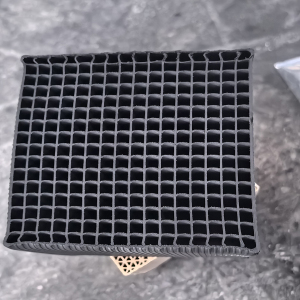
Honeycomb activated carbon
彼らの分類: ハニカム活性炭ビュー: 5番号:解放時間: 2026-04-03 16:28:44The urgent need for environmental governance in 2026 has risen, and honeycomb activated carbon has become the core material for VOCs purificationWith the continuous strengthening of domestic environmental supervision, the "dual carbon" target has been incorporated into the local assessment system, and the treatment of industrial waste gas and wastewater has become a mandatory requirement for enterprises to comply with production regulations. In this context, the demand for efficient and environmentally friendly adsorption materials in the market has experienced explosive growth. Hone...
ニュース
カテゴリー:
検索結果はありません!
ケース
カテゴリー:
検索結果はありません!
ビデオ
カテゴリー:
検索結果はありません!
ダウンロード
カテゴリー:
検索結果はありません!
採用
カテゴリー:
検索結果はありません!
おすすめ商品
検索結果はありません!



 ワッツアップ
 電話
電話 電子メール
電子メール